

If you could sit down with your 25-year-old self and tell them what’s coming, what would you say?...
Friday night in our house is usually family movie night. One movie we’ve watched a couple of times is The Fall Guy, which feels like the quintessential summer blockbuster. Think Ryan Gosling as a stuntman, big action scenes, a little romance, and plenty of explosions.
We’ll gloss over the fact that this PG-13 movie may have been a little mature for a couple members of our household. I felt redeemed, though, when something on a wall in the background of one scene caught my attention, turning this movie night into an unexpected teaching moment:
Everything you want is on the other side of fear.
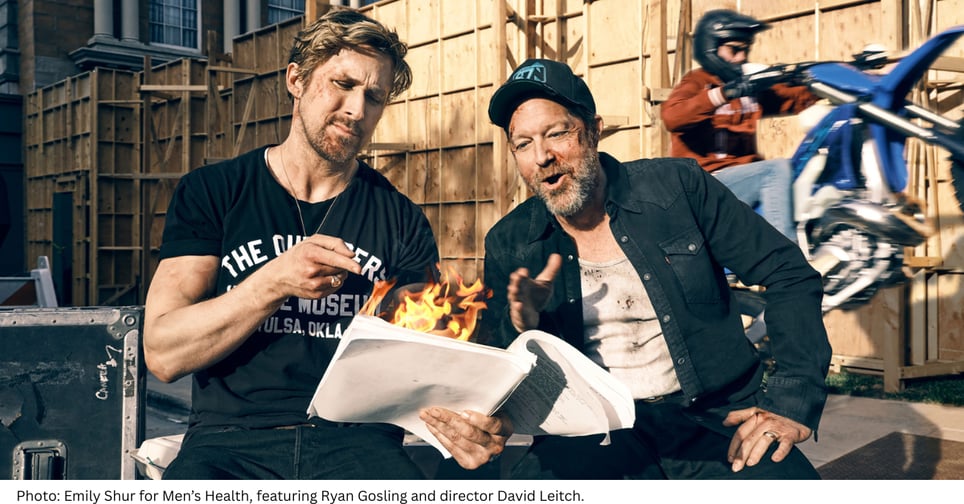
Turns out, this line comes from the movie’s director, David Leitch, who considers it his personal creed. That makes sense when you consider his own career path. He went from working as a stuntman to directing a major action film with one of the biggest movie stars in the world.
That kind of leap does not happen without fear. Then again, most meaningful leaps don’t.
When I think about the things that have scared me most in my own life, a few examples immediately spring to mind. I think about majoring in communication studies even though it required me to take public speaking, which was one of my greatest fears at the time. I remember packing my car after college and driving to New York to start a new life. I think about leaving the marketing world to build a coaching practice.
None of those decisions felt easy, and they certainly came with uncertainty. Each one required me to take a chance and move toward something I wanted before I felt fully ready. That is usually how growth works.
We often want the outcome on the other side: the new role, the stronger voice, the healthier team dynamic, the more honest conversation, the bigger opportunity, the next version of ourselves. What we sometimes forget is that getting there usually means stretching in ways we would rather avoid.”
In business, that might mean speaking up when it would be easier to stay quiet. It might mean giving direct feedback instead of softening the message so much that no one knows what we really mean. It might mean handing something off even though we know we could do it faster ourselves. It might mean asking for the role, naming the problem, changing the strategy, or making a decision before every detail is perfectly clear.
Fear is not always a warning sign. Sometimes it is a byproduct of moving into unfamiliar territory.
Rather than waiting for fear to disappear, be honest about what you want, understand what is making you hesitate, and decide whether that fear deserves to determine your next move.
For those who like a simple framework, here are four things that help.
1. Define the goal.
What do you actually want? Be specific. Most meaningful goals require new choices, new behaviors, or new experiences. When the discomfort kicks in, you need a clear reason to keep going back to.
2. Build your support system.
Your support system may include the obvious people: a spouse, close friend, mentor, coach, or trusted colleague. Also think about who is uniquely suited to support this specific stretch. Who has walked a similar path? Who understands the industry, the situation, or the fear itself?
3. Practice stamina.
Getting past fear usually happens through practice, not one big breakthrough. You do the thing, then you do it again, until it starts to feel less intimidating.
Anyone who has ever set a New Year’s resolution knows discipline matters more than motivation. Decide what you are going to practice, then keep practicing it even when it feels uncomfortable.
4. Set and celebrate milestones.
Fear can make progress hard to see. Define what progress looks like before you start. Then notice the evidence along the way: what you said differently, what you handled better, what felt a little less intimidating the second or third time around.
The more I think about that line from *The Fall Guy*, the more I think it works because it is simple and true. Fear will show up anytime we are doing something new, uncomfortable, or important. We still get to decide how much influence it has over what we do next.
We do not usually get to courage first. We get there by moving through the fear, one decision at a time.